Heat haze is the shortcut everyone reaches for in a desert or summer scene, and it is the effect AI video fakes most often. Ask a model for heat haze and the whole frame wobbles like jelly. The face of the person in the foreground ripples and melts. The mirage on the road turns into real puddles that splash under the tyres. Sometimes the shimmer even turns up on a cool, cloudy morning with no heat anywhere in sight.
I have been writing heat the way a desert cinematographer would brief it, and the fix comes down to one idea: heat haze lives in the air, never in the subject. Here is how real heat shimmer behaves, and the prompts I use to keep it where it belongs.
What is heat haze, and why does AI get it wrong?
Heat haze is not a filter laid over the picture. It is the air itself. A hot surface heats the layer of air just above it, that air bends light unevenly, and anything you look at through a long stretch of it seems to waver. EarthSky's explainer on highway mirages puts it simply: the asphalt is much hotter than the air above it, and light passing through those layers deviates from a straight line.
That is why a face a few feet from the lens stays perfectly solid while a figure half a mile down the road melts at the edges. Models tend to treat heat haze as a style applied to the whole frame, so they warp everything equally. Your prompt has to tell them where the hot air is, how much of it the camera looks through, and what stays sharp.
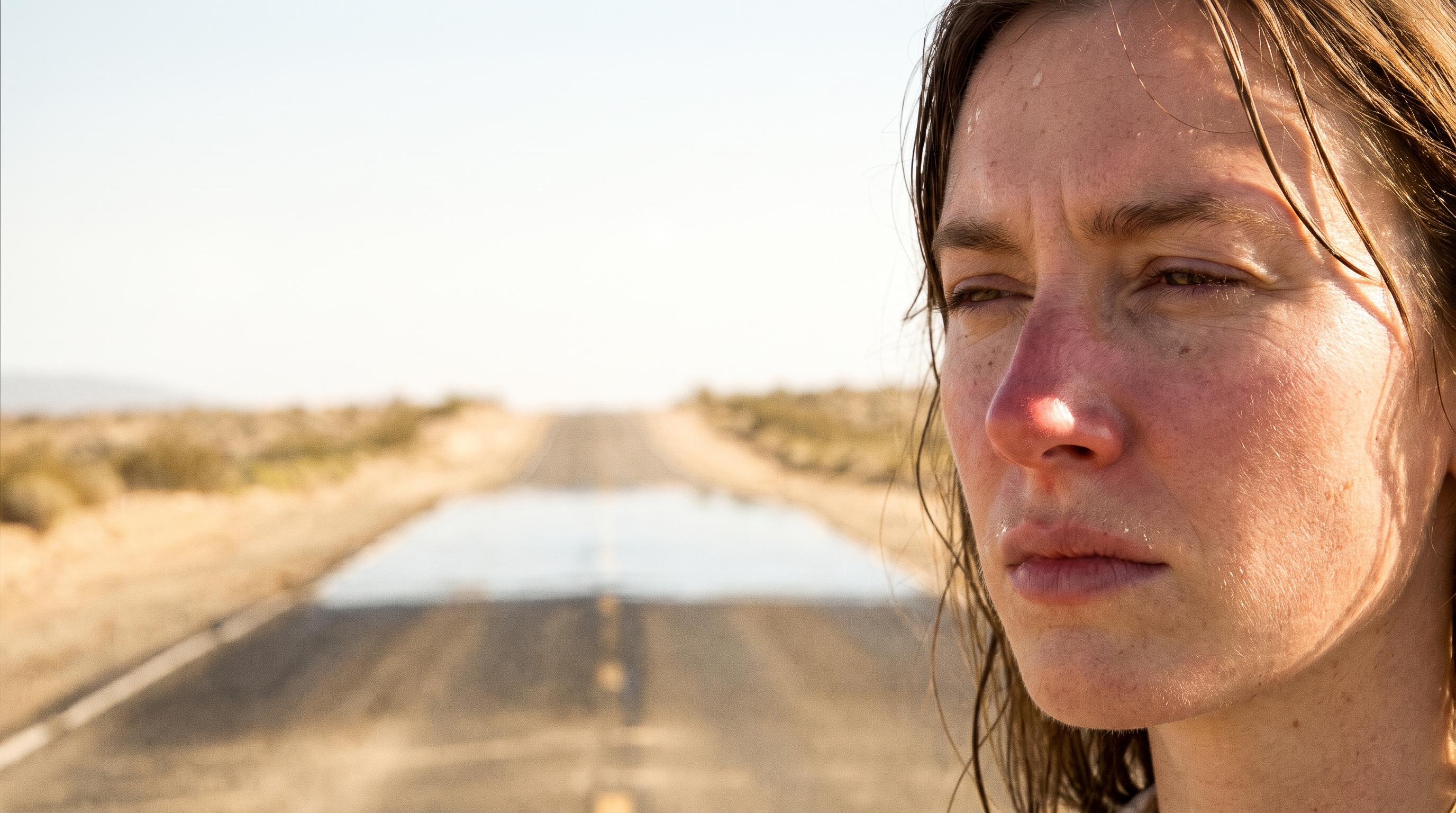
Where should heat haze sit in the frame?
Keep three rules in every heat haze prompt:
- In the air, not the subject. Only far things waver. The near person stays solid and sharp, down to the pores.
- Low and far. The shimmer is strongest in a thin trembling layer just above the hot ground and along the horizon, and calmer higher up.
- Ripples, not wobble. Real shimmer moves in fine, fast ripples flowing upwards. The frame itself never sways.
Say all three in plain words. "Heat haze" on its own invites the model to warp the whole picture.
Prompt · Nano Banana Pro
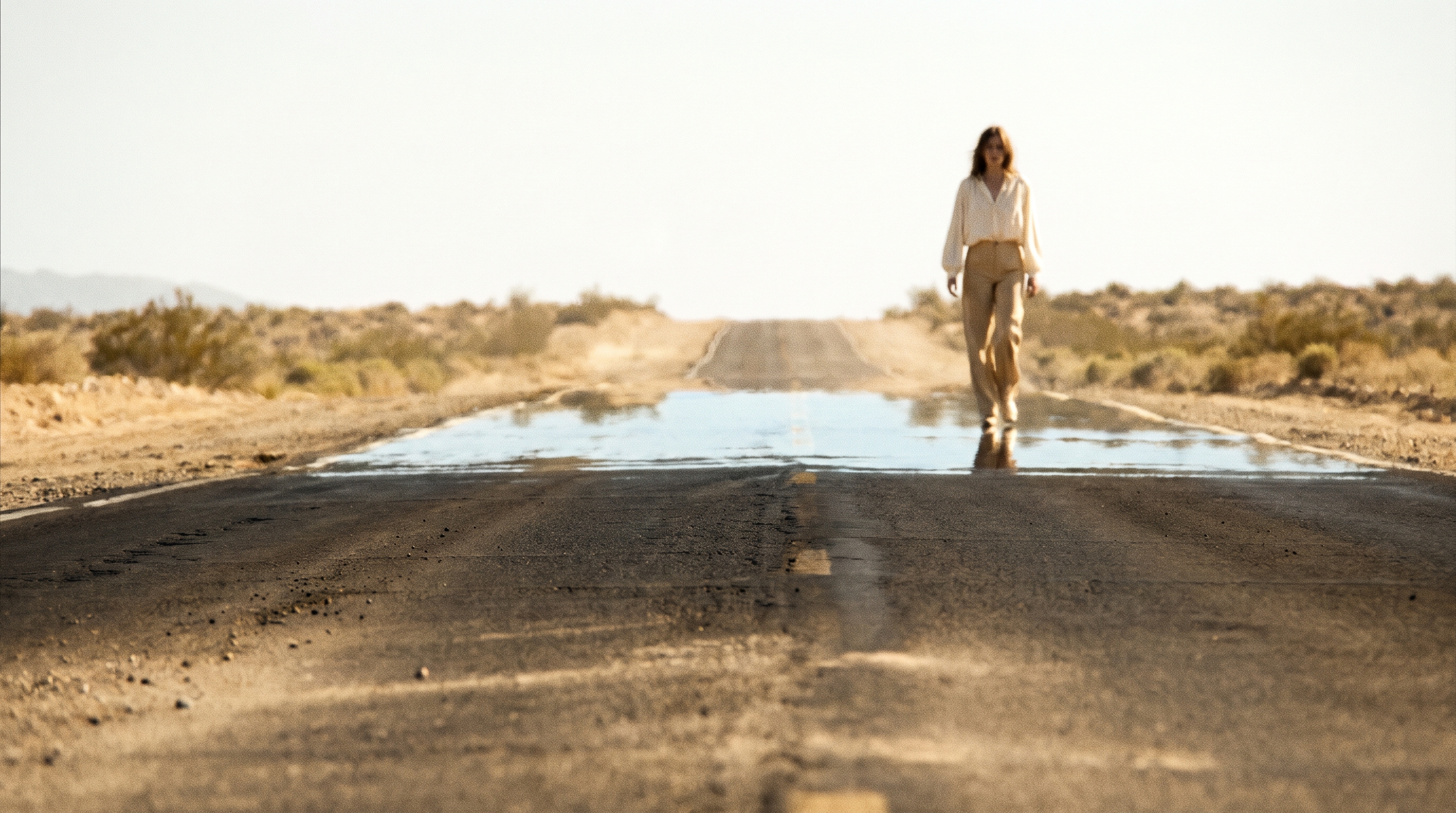
Photoreal film still, 200mm telephoto lens. A woman in a plain cream linen shirt squints against the high midday sun on a long straight desert road, a light sheen of sweat on her forehead. Her face is solid and pin sharp with real skin texture. Far behind her, fine fast heat shimmer ripples only in the thin layer just above the distant tarmac and along the horizon. Nothing near her warps. Bleached pale sky, warm bone and brass palette, subtle 35mm grain, 16:9. No signs, no writing, no logos.
Why does a long lens show more heat haze?
A long lens looks through far more air. A 200mm frame compresses a long stretch of road into the picture, so it stacks all that hot air between the camera and the distance. PetaPixel's guide for long lens shooters notes that the distortion is worst on distant subjects and towards the horizon line, and that long lenses make it more noticeable.
A wide lens shows heat haze only as a faint tremble on the horizon. So if you want the shimmer to read, name the long lens in the prompt. I wrote more about how lens choice shapes space in focal length as narrative, and heat is one of the clearest cases of it.
How do you prompt a mirage that looks real?
The mirage is where AI heat haze breaks most often. On a hot road, the pale sky is bent upwards towards your eye, so you see a silver pool far ahead that mirrors the sky and anything standing in it upside down. EarthSky describes it as refracted light from the sky just above the horizon, which is why physicists call it an inferior mirage. It is not water. It keeps the same distance ahead as you approach, and it never wets the road.
Write it that way: a silver pool on the far road that reflects the sky, slides back as the camera moves forward, and stays dry. Never let a tyre or a foot splash through it.
Prompt · Seedance, Kling or Veo
Cinematic shot, 200mm telephoto lens at road level, locked off. High white midday sun on a long straight dark tarmac desert road. Far down the road a lone woman in cream linen walks towards camera, her legs dissolving into a silver mirage pool that mirrors the pale sky and her upside-down reflection. Fine fast heat shimmer ripples upwards only in the thin layer above the far road and along the horizon. As she walks closer her figure firms up and sharpens; the mirage stays the same distance ahead and never splashes. The near road surface stays crisp and still. Dry hush, faint wind over scrub, distant cicadas. 16:9, 10 seconds. Avoid: whole-frame wobble, warping face, real puddles, splashing, cloudy sky.
What makes a heat haze shot believable?
Two things sell heat haze more than the shimmer itself.
Name the heat. High sun on dark tarmac, pale sand at noon, coals in a street grill, the bonnet of a car that has been driving for hours. No source, no haze. A shimmer in deep shade or on a grey morning tells the viewer something is off.
Let people feel it. They squint, sweat, move slowly and look for shade. A character standing fresh and dry in a furnace undoes the whole effect, and real skin detail matters here: sweat, sunburn and damp hair do more work than any distortion.
Make the start frame and end frame as stills first, then animate between them, so the light and the heat stay the same from the first picture to the last. If a move still feels weightless across that distance, give it foreground anchors to measure depth against, and make sure it is motivated camera movement with a reason behind it.
Heat lives in the air
Next time a desert shot comes back melting, check your prompt for the source of the heat, the long stretch of air, the long lens, the fine fast ripples, the sharp near subject and the mirage that keeps its distance. Write those six things and the model usually stops wobbling the frame and starts painting the air.
Questions
What causes heat haze?
Heat haze happens when a hot surface such as tarmac or sand heats the air just above it. That warm air bends light unevenly, so anything seen through a long stretch of it appears to shimmer.
Why does AI video make the whole frame wobble when I ask for heat haze?
Models tend to treat heat haze as a style applied to the whole picture. Tell the model the shimmer sits only in the thin layer above the far hot surface, that the near subject stays sharp and that the frame itself never sways.
Which lens shows heat haze best?
A long telephoto lens, around 200mm, because it compresses a long stretch of hot air into the frame. A wide lens shows heat haze only as a faint tremble on the horizon.
How do I prompt a realistic road mirage?
Describe a silver pool far down the road that mirrors the pale sky and anything standing in it upside down, stays the same distance ahead as the camera moves and never wets the road or splashes.
How does Jo Aiba make heat haze shots believable?
Jo Aiba names a real heat source, keeps skin detail like sweat and sunburn on the characters, and makes the start and end frames as stills first so the light and heat stay consistent across the clip.