I keep coming back to how frequently we accept whichever optical perspective an AI model hands us by default. When you prompt a dramatic scene without specifying a focal length, image and video models usually fall back on a generic mid wide lens where everything from foreground to background remains uniformly sharp. The image might look clean, but it often lacks a clear visual viewpoint or emotional weight.
In traditional cinematography, lens selection is never just a technical decision about fitting actors into frame. A wide lens brought close to an actor's face introduces immediate emotional tension, slightly stretching spatial features and forcing the audience into their personal space. Conversely, a long telephoto lens compresses distance, stacking background elements directly behind the subject to generate feelings of claustrophobia, surveillance, or isolation. When we bring that exact level of visual discipline into AI video workflows, our generated clips stop looking like synthetic render tests and begin looking like actual cinema.
How do you control spatial depth with focal length?
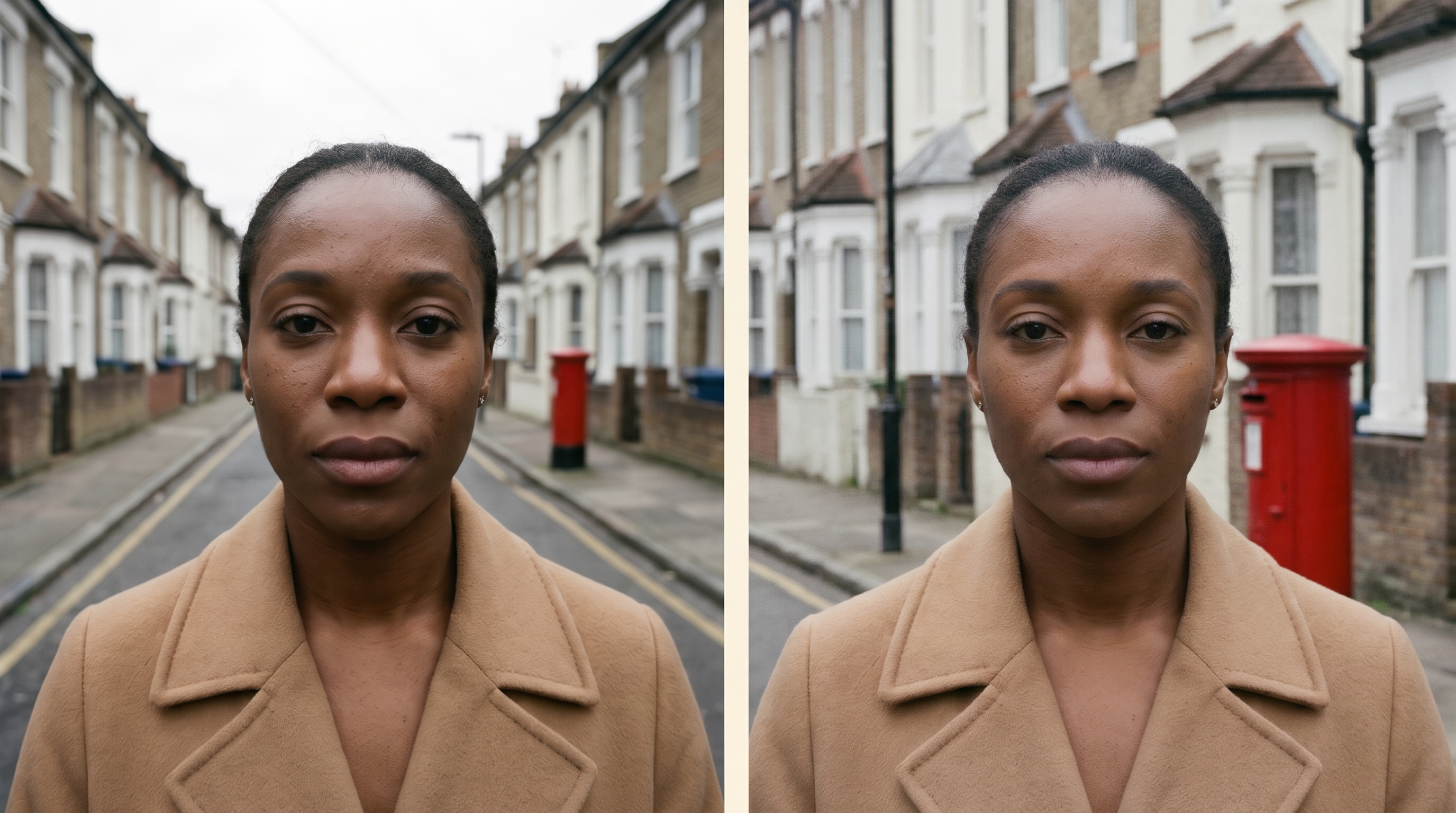
What strikes me is that AI models respond far better to described optical behaviour than to isolated buzzwords. Rather than relying solely on focal numbers, explain how spatial compression and depth of field behave in the shot. You want to guide the model to understand how light falls across different depth planes and how the background should blur relative to the focus point. Canon's guide to lens perspective explains the real camera version: shorter lenses stretch the space behind a subject, while longer lenses pull the background right up behind them.
To create an intimate, somewhat uncomfortable character moment, try combining a wide focal length with tight framing. This keeps environmental context visible while emphasising expression:
Prompt
Close up shot of an elderly sea captain on a wooden ship deck, shot on a 24mm wide angle lens, subtle spatial distortion, shallow depth of field, soft rolling ocean in background, golden hour warm light, hyper-realistic texture, cinematic video frame, --ar 16:9
Which focal length suits tension, realism or movement?
For dramatic scenes requiring intense emotional focus or tension, long focal length prompts excel. In tools like Sora, Kling, or Flux, specifying optical compression helps compress background clutter into a rich painterly backdrop that frames your subject cleanly:
Prompt · Sora, Kling or Flux
Medium shot of a detective standing in a rain slicked alleyway, shot on a 135mm telephoto lens, heavy optical background compression, blurred neon signage stacked behind subject, dramatic rim lighting, atmospheric mist, high visual detail, --ar 16:9
When establishing narrative beats that feel grounded, objective, and documentary like, neutral focal lengths allow room for natural motion without optical exaggeration:
Prompt
Wide shot of a painter in a lofty art studio, shot on a 50mm prime lens, natural human perspective, gentle falloff, soft morning sunlight through large windows, dust motes floating in air, grounded cinematic composition, --ar 16:9
For dynamic tracking shots where a camera moves through an environment, specifying optical properties helps video models calculate realistic perspective shifts. A wide angle movement creates dynamic speed, while a telephoto track maintains tight composition:
Prompt
Low angle tracking shot of a runner moving through a misty forest path, shot on 85mm portrait glass, smooth background separation, dappled sunlight breaking through trees, organic motion blur, grounded cinematic camera movement, --ar 16:9
Lens choice also changes how camera moves read. If a move still feels weightless, give it foreground anchors to measure depth against, and make sure it is motivated camera movement with a reason behind it.
Why does lens consistency matter across a sequence?
When assembling a full sequence, maintaining focal consistency across your shot list becomes crucial. A dramatic cut between shots with wildly mismatched optic profiles can break immersion instantly. By establishing a consistent lens language early in your generation process, your edits feel smooth, cinematic, and deliberate.
I think the real question is how we want the audience to experience the space inside the frame. Once you decide whether a scene demands spatial compression or intimate wide angle exposure, your prompt choices become far clearer.
No art passes our conscience in the way film does, and goes directly to our feelings, deep down into the dark rooms of our souls.
Ingmar Bergman
Questions
Why do AI video models give a generic look when I don't specify a lens?
When you prompt a dramatic scene without lens geometry, image and video models usually fall back on a generic mid wide lens. Everything from foreground to background stays uniformly sharp, so the image can look clean but lack a clear viewpoint or emotional weight.
What focal length should I prompt for an intimate or uncomfortable close up?
Combine a wide focal length with tight framing. The article's example uses a 24mm wide angle lens with subtle spatial distortion and shallow depth of field, which keeps environmental context visible while emphasising expression.
How do I get a compressed, tense background in AI video?
Use a long telephoto prompt and describe the compression. The article's example uses a 135mm telephoto lens with heavy optical background compression and blurred neon signage stacked behind the subject, in tools like Sora, Kling or Flux.
Which lens gives a neutral, documentary feel?
A 50mm prime gives a natural human perspective without optical exaggeration. The article pairs it with gentle falloff and soft morning light for grounded narrative beats.
Why does focal consistency matter across a sequence?
A cut between shots with wildly mismatched optic profiles can break immersion instantly. Establishing a consistent lens language early makes edits feel smooth, cinematic and deliberate.